Saturday, July 11, 2015

Wrapping up: Part 6 - The Most Recent Century, 1914 - 2012

Global change (Feminism, Religious, Environmental) - 

Reading through the text a few pictures grabbed my attention -

  1. An Aspect of Brazilian Feminism pg 1154
  2. Hamas in Action pg 1161 
  3. Environmentalism in Action pg. 1169


Very powerful pictures and we continue to deal with these matters.

Picture #1 - The protest on the violence against women. These women dressed as "sluts" - wearing revealing clothing with signs declaring, "It's my body." They were fighting against the issue that women who were raped were asking for it because of the way they were dressed. How many times have we heard this? It is always the women's fault... did you see what she was wearing...she was asking for it... we can go on and on and on! I get it.. but for the most part that is not the case. Despite what someone is wearing - they don't serve it. This maybe random but it gets me thinking about a book I had read for class - "The Bluest Eyes" by Toni Morrison. The concept of treating people with respect even children. Reading "The Bluest Eyes" give you a whole another perspective on people and their perceptions. It is not an easy read and get's in your head. Feminism is one of the pieces we need to tackle but it too goes in line with religion, race and culture. Will there be a point that we can accept each other? The text hit upon how different women have different needs across the world. Some want equality across the board while others just want freedom of choice. Religion plays a major role in this piece, for example, in the Islamic world. In the Islamic world, Western-style feminism, with its claims of gender equality and open sexuality, was highly offensive to many and fueled movements of religious revivalism that invited or compelled women to wear the veil and sometimes to lead highly restricted lives (Strayer, pg. 1155).

SlutWalk-Tegucigalpa [Honduras]
http://www.winnovating.com/wp-content/uploads/2013/10/SlutWalkTegucigalpa-Honduras-crowd.png

---

Picture #2 - Hamas in Palestine and Hezbollah in Lebanon, supported by the Islamic regime in Iran, targeted Israel with popular uprisings, suicide bombings, and rocket attacks in response to the Israeli occupation of Arab lands (Strayer, pg 1160). One picture showed would-be suicide bombers and in another picgture showed how this group runs a network of social services, providing schools, clinics, orphanages, summer camp, soup kitchens, and libraries for Palestinians (Strayer, pg 1161). Amazing how this group appeals to violence and yet makes a point to ensure their community is taken care of. Granted I do not know what they are teaching their children.
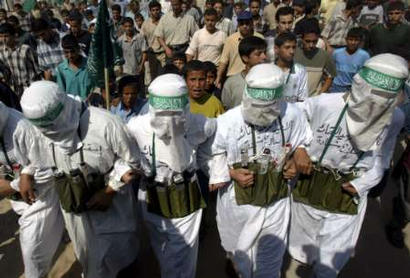
http://www.ascertainthetruth.com/att/images/stories/myths/eight.jpg

Hamas introduces anti-Israeli school books: Palestinian textbook accused of demonizing Israelis
http://i.ytimg.com/vi/gbZ5C8IQrFA/hqdefault.jpg
---

Picture #3 - South Korean environmental activists wearing masks and holding crosses representing different countries during an antinuclear protest in Seoul 1996 (Strayer, pg 1169). There was a sign that said, "Don't forget Chernobyl." This is how naive I am and lame - I have to add I am not up to date with my current events now or never. So when I saw Chernobyl - I thought of the scary movie I watched. I didn't realize it was real. Granted the movie was another rendition of the "Hills Have Eyes" in my opinion but it had its freaky element to it. I did not realize that in 1986 that there was a large-scale nuclear accident at Chernobyl in the Soviet Union (Strayer, pg 1169).  To fair I am about to date myself but I was in elementary school. But just thinking what an impact we have on the planet and all the damage we have done - which all started from the industrial revolution. From Hiroshima and Nawasaki to Chernobyl and the Fukushima Daiichi nuclear disaster. I am amazed our planet is still thriving for now. I can imagine what the future may look like.. if you have seen Terminator (any version) and/or Matrix then you know what I am thinking. Or even Mad Max.

Here is a picture but it is not what is in the text but to give you an idea. This was taken by protesters in Manila:
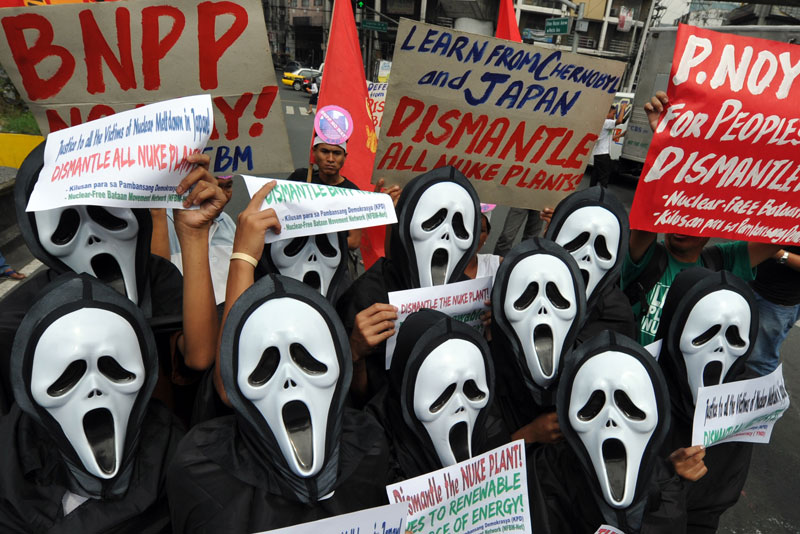
Anti-nuclear activists hold a protest near the presidential palace in Manila on March 15, 2011.
(TED ALJIBE/AFP/Getty Images)

http://asiasociety.org/blog/asia/japans-wake-can-nuclear-be-relied-upon-fuel-asias-boom

Sunday, July 5, 2015

Part 6: The Most Recent Century, 1914 - 2012

The Legacies of Great Wars -
Gender and the war: Mother’s Day versus flappers


It makes sense that the women did take the place of men in the factories while they were on the battlefield but then were pushed out and encouraged to go back home so the men could have their jobs back and there was no competition for them. Women were automatically put in the role to handle the household stuff. It was obvious that the women were more than capable to handle the work at the factory and were probably doing just fine. They were there when the government needed them but the moment the men come home.. they were kicked to the curb. I may sound a little drastic but that is how I read it. There is no way to sugar coat it in my eyes. Making money for the family.. and I bet you there were some women that actually enjoyed working and not always being stuck at home. I know I enjoy working. How would you take it if you read this in the textbook - "Women were urged to leave factory work and return to their homes where they would not compete for "men's jobs."(Strayer p. 988). I can assume that some of these women could have been mothers or single. Regardless of their situation at home, they had every right to continue to work the factories as they see fit... especially the ones that out performed the men.


My favorite was what the French authorities proclaimed, "Mother's Day as a new holiday designed to encourage childbearing and thus replace the millions lost in the war" (Strayer p. 988). I never knew that this was the case. It is a very interesting way to look at Mother's day. I am little thrown off.. I am not sure how to respond to this. Encouraging women to have kids and as result you get a holiday? I don't see the incentive. I have 4 children and I love them to death. I had kids because I wanted too not because I get a holiday. To be honest, it is almost like being jipped - only once a year - so what is the history of Father's day? Luckily, the US had a different stand point on Mother's day.

So I did my little digging around on the internet and this is what I came up with for Mother's and Father's Day for the U.S. from the History. Below are excerpts I copied and pasted into this blog - check out the link to read more about the history of Mother's and Father's day (link: http://www.history.com/topics/holidays/fathers-day).

Mother's Day - 


[Mother’s Day did not become a commercial holiday until 1908, when–inspired by Jarvis’s daughter Anna, who wanted to honor her own mother by making Mother’s Day a national holiday–the John Wanamaker department store in Philadelphia sponsored a service dedicated to mothers in its auditorium. Thanks in large part to this association with retailers, who saw great potential for profit in the holiday, Mother’s Day caught on right away. In 1909, 45 states observed the day, and in 1914, President Woodrow Wilson approved a resolution that made the second Sunday in May a holiday in honor of “that tender, gentle army, the mothers of America.”]

Father's Day - 


[Sonora Smart Dodd, one of six children raised by a widower, tried to establish an official equivalent to Mother’s Day for male parents. She went to local churches, the YMCA, shopkeepers and government officials to drum up support for her idea, and she was successful: Washington State celebrated the nation’s first statewide Father’s Day on July 19, 1910. Slowly, the holiday spread. In 1916, President Wilson honored the day by using telegraph signals to unfurl a flag in Spokane when he pressed a button in Washington, D.C. In 1924, President Calvin Coolidge urged state governments to observe Father’s Day. However, many men continued to disdain the day. As one historian writes, they “scoffed at the holiday’s sentimental attempts to domesticate manliness with flowers and gift-giving, or they derided the proliferation of such holidays as a commercial gimmick to sell more products–often paid for by the father himself.”]
---

Flappers


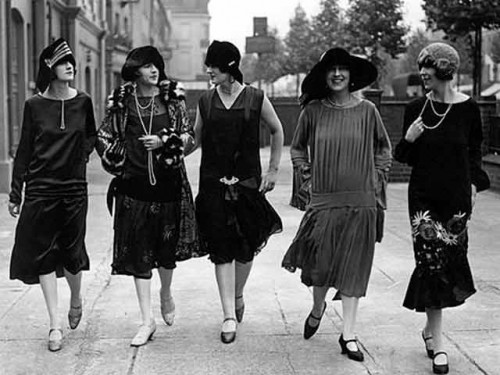
Lastly, our Flappers - we gotta love them. Our rebel ladies that defied being of the norm. "The young middle-class women, sometimes known as "flappers," began to flout convention by appearing at nightclubs, smoking, dancing, drinking hard liquor, cutting their hair short wearing revealing clothing, and generally expressing a more open sexuality" (Strayer p. 988). It pretty much sounds like college to me. Our perspective has definitely changed since then. I don't think there is nothing wrong with having a little fun. We all need it every now and then. I guess during this time is was clear that women were making a statement now. We have definitely gone a long way since then.