Saturday, July 11, 2015

Wrapping up: Part 6 - The Most Recent Century, 1914 - 2012

Global change (Feminism, Religious, Environmental) - 

Reading through the text a few pictures grabbed my attention -

  1. An Aspect of Brazilian Feminism pg 1154
  2. Hamas in Action pg 1161 
  3. Environmentalism in Action pg. 1169


Very powerful pictures and we continue to deal with these matters.

Picture #1 - The protest on the violence against women. These women dressed as "sluts" - wearing revealing clothing with signs declaring, "It's my body." They were fighting against the issue that women who were raped were asking for it because of the way they were dressed. How many times have we heard this? It is always the women's fault... did you see what she was wearing...she was asking for it... we can go on and on and on! I get it.. but for the most part that is not the case. Despite what someone is wearing - they don't serve it. This maybe random but it gets me thinking about a book I had read for class - "The Bluest Eyes" by Toni Morrison. The concept of treating people with respect even children. Reading "The Bluest Eyes" give you a whole another perspective on people and their perceptions. It is not an easy read and get's in your head. Feminism is one of the pieces we need to tackle but it too goes in line with religion, race and culture. Will there be a point that we can accept each other? The text hit upon how different women have different needs across the world. Some want equality across the board while others just want freedom of choice. Religion plays a major role in this piece, for example, in the Islamic world. In the Islamic world, Western-style feminism, with its claims of gender equality and open sexuality, was highly offensive to many and fueled movements of religious revivalism that invited or compelled women to wear the veil and sometimes to lead highly restricted lives (Strayer, pg. 1155).

SlutWalk-Tegucigalpa [Honduras]
http://www.winnovating.com/wp-content/uploads/2013/10/SlutWalkTegucigalpa-Honduras-crowd.png

---

Picture #2 - Hamas in Palestine and Hezbollah in Lebanon, supported by the Islamic regime in Iran, targeted Israel with popular uprisings, suicide bombings, and rocket attacks in response to the Israeli occupation of Arab lands (Strayer, pg 1160). One picture showed would-be suicide bombers and in another picgture showed how this group runs a network of social services, providing schools, clinics, orphanages, summer camp, soup kitchens, and libraries for Palestinians (Strayer, pg 1161). Amazing how this group appeals to violence and yet makes a point to ensure their community is taken care of. Granted I do not know what they are teaching their children.
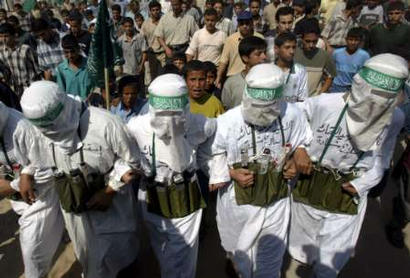
http://www.ascertainthetruth.com/att/images/stories/myths/eight.jpg

Hamas introduces anti-Israeli school books: Palestinian textbook accused of demonizing Israelis
http://i.ytimg.com/vi/gbZ5C8IQrFA/hqdefault.jpg
---

Picture #3 - South Korean environmental activists wearing masks and holding crosses representing different countries during an antinuclear protest in Seoul 1996 (Strayer, pg 1169). There was a sign that said, "Don't forget Chernobyl." This is how naive I am and lame - I have to add I am not up to date with my current events now or never. So when I saw Chernobyl - I thought of the scary movie I watched. I didn't realize it was real. Granted the movie was another rendition of the "Hills Have Eyes" in my opinion but it had its freaky element to it. I did not realize that in 1986 that there was a large-scale nuclear accident at Chernobyl in the Soviet Union (Strayer, pg 1169).  To fair I am about to date myself but I was in elementary school. But just thinking what an impact we have on the planet and all the damage we have done - which all started from the industrial revolution. From Hiroshima and Nawasaki to Chernobyl and the Fukushima Daiichi nuclear disaster. I am amazed our planet is still thriving for now. I can imagine what the future may look like.. if you have seen Terminator (any version) and/or Matrix then you know what I am thinking. Or even Mad Max.

Here is a picture but it is not what is in the text but to give you an idea. This was taken by protesters in Manila:
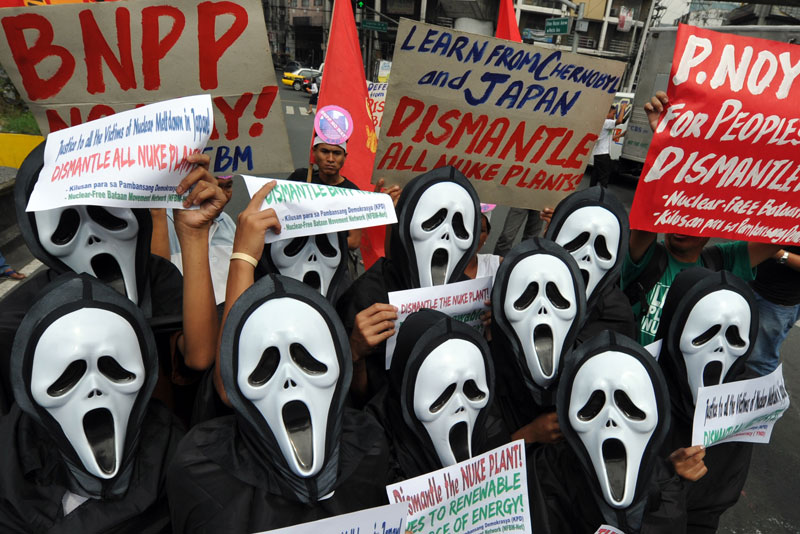
Anti-nuclear activists hold a protest near the presidential palace in Manila on March 15, 2011.
(TED ALJIBE/AFP/Getty Images)

http://asiasociety.org/blog/asia/japans-wake-can-nuclear-be-relied-upon-fuel-asias-boom

Sunday, July 5, 2015

Part 6: The Most Recent Century, 1914 - 2012

The Legacies of Great Wars -
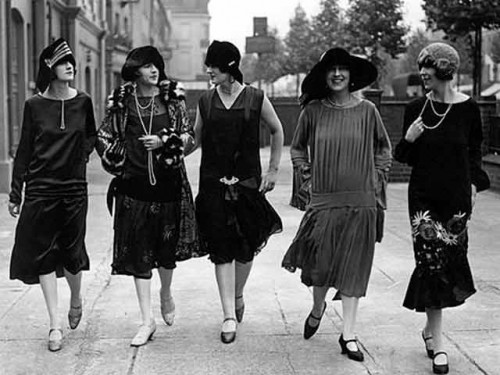
Gender and the war: Mother’s Day versus flappers


It makes sense that the women did take the place of men in the factories while they were on the battlefield but then were pushed out and encouraged to go back home so the men could have their jobs back and there was no competition for them. Women were automatically put in the role to handle the household stuff. It was obvious that the women were more than capable to handle the work at the factory and were probably doing just fine. They were there when the government needed them but the moment the men come home.. they were kicked to the curb. I may sound a little drastic but that is how I read it. There is no way to sugar coat it in my eyes. Making money for the family.. and I bet you there were some women that actually enjoyed working and not always being stuck at home. I know I enjoy working. How would you take it if you read this in the textbook - "Women were urged to leave factory work and return to their homes where they would not compete for "men's jobs."(Strayer p. 988). I can assume that some of these women could have been mothers or single. Regardless of their situation at home, they had every right to continue to work the factories as they see fit... especially the ones that out performed the men.


My favorite was what the French authorities proclaimed, "Mother's Day as a new holiday designed to encourage childbearing and thus replace the millions lost in the war" (Strayer p. 988). I never knew that this was the case. It is a very interesting way to look at Mother's day. I am little thrown off.. I am not sure how to respond to this. Encouraging women to have kids and as result you get a holiday? I don't see the incentive. I have 4 children and I love them to death. I had kids because I wanted too not because I get a holiday. To be honest, it is almost like being jipped - only once a year - so what is the history of Father's day? Luckily, the US had a different stand point on Mother's day.

So I did my little digging around on the internet and this is what I came up with for Mother's and Father's Day for the U.S. from the History. Below are excerpts I copied and pasted into this blog - check out the link to read more about the history of Mother's and Father's day (link: http://www.history.com/topics/holidays/fathers-day).

Mother's Day - 


[Mother’s Day did not become a commercial holiday until 1908, when–inspired by Jarvis’s daughter Anna, who wanted to honor her own mother by making Mother’s Day a national holiday–the John Wanamaker department store in Philadelphia sponsored a service dedicated to mothers in its auditorium. Thanks in large part to this association with retailers, who saw great potential for profit in the holiday, Mother’s Day caught on right away. In 1909, 45 states observed the day, and in 1914, President Woodrow Wilson approved a resolution that made the second Sunday in May a holiday in honor of “that tender, gentle army, the mothers of America.”]

Father's Day - 


[Sonora Smart Dodd, one of six children raised by a widower, tried to establish an official equivalent to Mother’s Day for male parents. She went to local churches, the YMCA, shopkeepers and government officials to drum up support for her idea, and she was successful: Washington State celebrated the nation’s first statewide Father’s Day on July 19, 1910. Slowly, the holiday spread. In 1916, President Wilson honored the day by using telegraph signals to unfurl a flag in Spokane when he pressed a button in Washington, D.C. In 1924, President Calvin Coolidge urged state governments to observe Father’s Day. However, many men continued to disdain the day. As one historian writes, they “scoffed at the holiday’s sentimental attempts to domesticate manliness with flowers and gift-giving, or they derided the proliferation of such holidays as a commercial gimmick to sell more products–often paid for by the father himself.”]
---

Flappers


Lastly, our Flappers - we gotta love them. Our rebel ladies that defied being of the norm. "The young middle-class women, sometimes known as "flappers," began to flout convention by appearing at nightclubs, smoking, dancing, drinking hard liquor, cutting their hair short wearing revealing clothing, and generally expressing a more open sexuality" (Strayer p. 988). It pretty much sounds like college to me. Our perspective has definitely changed since then. I don't think there is nothing wrong with having a little fun. We all need it every now and then. I guess during this time is was clear that women were making a statement now. We have definitely gone a long way since then.


Monday, June 29, 2015

Part 5: The European Moment in World History, 1750-1914

Colonial Empires with a Difference -

It never fails, I learn something new today... that something for me is "scientific racism". I would never have thought you would put those words together and come out with something as to what Strayer did - "One was the prominence of race in distinguishing rulers and ruled, as the high tide of "scientific racism" in Europe coincided with the acquisition of Asian and African colonies. What does that mean? Does that mean the European "scientifically" determined who was better than the other? Who could the European's dominate over? That is not a science...to me that is just greedy, fear of being bullied themselves and power hungry. Strayer goes on to say, "In East Africa, white men expected to be addressed as bwana (master in Swahili) where Europeans addressed African men as boy." Basically, any person native to the land the Europeans came up with the bright idea that they all came from tribes and they are primitive. I think I read it correctly, but I could have sworn the text said that the "European identified and, "sometimes invented", distinct tribes, each with its own territory, language, customs and chief." Of course I shortened the text but did I read it right where it said "sometime invented"? You have got to be kidding. Seriously?!? If this is the case, how true is what we have read about the Africans? What part was "sometimes invented"? The language? I cannot comprehend that this actually went on.

There was no way the Europeans were going to look at Asian an African people as equals. They look different so that means they are different and don't understand what is proper. They are primitive... oh my would not survive during this time. This particular section went on to bring in gender as another piece. Interesting comparison - European colonizers = active masculinity :: conquered races = soft, passive and feminine. Passive because they didn't fight back? or didn't have the means to fight back? The Europeans basically came in and bullied there way to dominance. Today, we look down on bullying and make every effort to educate people not to tolerate it. Just reading on and on about this piece in the text - we could pick a part everything that just seems off. Between putting people in a classification or determining how things should be done even they contradict themselves - I am surprised that the world has made it this far. Made it where people have changed their mindset and are not so fearful of the unknown and willing to have an open mind. But lets go back to the term "scientific racism". Putting people in a classification - was this thought up before we came up with the classification of animal/insect kingdom -

Below are examples of "scientific racism" I found on the internet. I am definitely out of the loop. I would have just called it racism. Nothing scientific about it. One is clearly judging by their look and background - there is no science behind that. I am probably missing what context it is being used but it hard for me to grasp because I work in the science field...o whell


Had to share this cartoon...

Tuesday, June 23, 2015

Part 4: Peak of the Early Modern World, 1450 - 1750

The power of trade...
In chapter 14th of the text it goes into types of trade that had a big influence and may have shaped the early modern world. Spice, silver, furs and slavs... yes I said slavs. Apparently that it was where slave derived from. It was said in the text that "Slavic-speaking peoples from the Black Sea region furnished the bulk of the slaves for Mediterranean plantations = Slav" which later became slave. I to learned something new or may be I already knew but this old brain can't retain much anymore.

Obviously out of the trades that I read through, the slave trade caught my attention. I do remember that slaves did originate from Africa and I knew Africans sold each other out to other countries and within their own communities. But I didn't really know or recall how it was all started. Reading there were somethings that just caught me by surprise. For instance, the Atlantic Slave Trade. Of course it would be the one the trade that had a huge negative impact on a global aspect and consequence to people. The "WOW" factor - between 1500  and 1866 the Atlantic Slave Trade to about 12.5 million people from African societies shipped across the Atlantic in the Middle Passage (p. 687).


I pulled this map and found it amazing that Africans not only went to Americas but also to Europe and West Indies. Why? What was so unique about Africans that even their own people thought it would be good idea to sell people? Who thought of the idea of marketing people for money? The text had mention that even the children of parents who were slaves would either grow up being a slave depending on where they are or they were free. For the children who continue on to be slaves because of their parents were would follow the belief of the caste system if you were Hindu. Just a far reaching thought...

The question, Why? was answered in the text and I have to say that I had mix feelings about what I read. Strayer pulled some examples of what other historians believed of why Africans were the suited as slaves and how discrimination evolved over time due to slavery. Let me share a few that .... well let me just share...it was said that other societies were running low and slaves and well Africa apparently had abundant of them... "Slavic people were no longer available; Native Americans quickly perished from European diseases; marginal Europeans were Christian so hands off; but Africans were skilled farmers, had some immunity to both tropical and European diseases, they were not Christians, close at hand and readily available in large numbers." Talk about be rewarded if you are healthy and strong. But the obvious.. their skin color. One historian said that the racial stereotype came from Muslims and Christians (p. 690). But I have to share my favorite view from a Tunisian scholar (Ibn Khaldun), 14th century - "black people were "submissive to slavery, because Negros have little that is essentially human and have attributes that are quire similar to those of dumb animals."" I give that the triple WOW factor! Seriously, I don't know where people come up with this stuff. I don't know what to say to that...

so I Googled "images of dumb animals"...


I pulled a few... the power of Google!

Monday, June 15, 2015

Part 3: Who is Temujin?

I have to admit majority of the history I can recall is either from movies or documentaries that I have watched in the past. So reading about Temujin was quite interesting. Do you know who Temujin is? Believe it or not that is Chinggis Khan's real name. Like I said, my history is based on movies and documentarites. I have the worse memory. Reading about the Mongols and Chinggis Khan in chapter 11 (Pastoral People on the Global Stage) caught my attention. Before I go into Temujin, there was something to be said about Pastoral Societies...

Women of Pastoral Societies...
First let me discuss a little about women of pastoral societies and what they offer to these types of communities. Pastoral societies (nomadic societies) generally offered woman a higher status (p. 515). The text went on to say that women were viewed as equal with men and were responsible for the food and children along with the opportunity to serve as political advisers. Throughout other countries that was unheard of. I wonder if this a reason outside communities would view this society as barbaric. Any tribe who would allow women to have power and be part of decision making are uncivilized. But yet the pastoral people I would say are group of people that understood the need to survive and pull their weight. It goes back to having that whole egalitarian view point. There was a statement stated in the text by a European visitor, Franciscan fiar Giovanni DiPlano Carpini view point of the women of Mongol - "Girls and women ride and gallop as skillfully as men. We even saw them carrying quivers and bows, and the women can ride horses for as long as men..." and he goes on to say how they are able to make a variety of things like shoes, and clothes, drive and repair carts. Because this society is very mobile, seasonal movement from land to land, it is crucial that these societies worked together. It takes a lot to move from one area to another especially with scares resources. I can go on about the how amazing this society is and how the managed to survive off the land with little. The texted had mention that they were not skilled agriculturist. I think the reason being is because they moved so much and with that they were driven to survive and would reach out to outside communities to get other items they needed to survive.


Ok. Who is Temujin?
As I mentioned before he is Chinggis Kahn. His story is fasinating. His father died from a  feuding tribe and he barely survived off the land with his mother. He did his own thing by developing a friendships and relationships outside of his kinship which helped him move up the ranks. It really caught my eye on how the text described the rise of Chinggis Kahn:

"Temujin's rise to power...it took place among shifting alliances and betrayals, a mounting string of military victories, the indecisiveness of his enemies, a reputation as leader generous to friends and ruthless to enemies, and the incorporation of warriors from defeated tribes into his own forces." 


What does it mean that his enemies were indecisive? They weren't sure if they wanted to go into battle with him? I would definitely want Chinggis Kahn as my friend. Anyway, it is interesting to read that the Mongol Empire really didn't have a game plan. "Each victory brought new resources for making war and new threats or insecurities that seemed to require more expansion" (p. 524). His universal mission - uniting the whole world in one empire. Wow!


Tuesday, June 9, 2015

Part 3: An Age of Accelerating Connections, 500-1500 - The "Silk Road"

The “Silk Road”. The initial flourishing of the Silk Road commerce was 200 B.C.E – 2oo C.E. The example of placing an order and 40 hours later it was shipped from China. What is more amazing? The fact that the order was shipped out within 40 hours across the world or the fact that we can go onto the internet and place an order?   I look at the Silk Road as an old school way of networking across communities and cultures. Silk became the golden product for consumers and merchants but it was not the only thing traded on the “Silk Road”. Even though we can’t really say it is a road, instead, we have to look at it as a network of trade routes. In my opinion, that still requires a road or a path with a destination in mind. From what I read and heard, it was so popular that there were attempts to ban silk but obviously that didn’t happened.

I see how this linked civilization between the Western & Eastern Eurasia by land and water. From the reading it along with some additional reading outside the text the overview I got was that there were 3 major outcomes that came from the Silk Road: 1) wider economic impact – as the market grew people chose to pursue going into business using silk; 2) Trading ideas – this goes back to the Greeks where they were full of ideas but the Romans were great at implementing them. Being exposed to so many different types of people’s and cultures of course there would be an exchange of knowledge. We humans are a very curious species and must make every effort to keep up with the latest. Goes back to the competition piece; 3) Diseases – this vast of worldwide connection brought diseases. Being exposed to the new and the unknown for one community was deadly. There was no hand sanitizer then. This still holds true for our countries. Customs will determine if goods are allowed to enter their country. One of the most deadly diseases that came about from the Silk Road was the plague that killed about half of the European population over a span of 4 years. Along with spreading other disease such as measles and small pox.

Going back to the network trading at the time. There was a table in the book that listed the sort of items that were traded during this period. The Forest lands of Siberia and grasslands of Central Asia were the only regions that seemed to be slightly aggressive. That region traded dead animals, livestock and slaves. No other region  traded people or animals. This could raise the question that these could have been a major contribution to the diseases. Especially if the other regions were not big meat eaters. It seems like the other regions were our gathers while Siberia and Central Asia were our hunters. It is a reach but again history is based on interpretation and assumptions. Below is the table from the text that outlined a snapshot of what was traded along the Silk Roads:


I do have to admit that trading and getting items today is definitely a lot quicker and easier now than it was 20 years ago. I remember that sending a letter overseas would take weeks. Now it can take a matter of days. Amazing!

Sunday, May 31, 2015

Part 2: 2nd Wave Civilizations in World History

My thoughts are all over the place. So many interesting things I read and skimmed through. From how the Persians mourn over a king's death, India with their caste system, Chinese and Roman empires more universal (thinking they are the center of everything) to Socrates being executed for being accused of corrupting the youth of Athens and the speculation of the Chacos' cannibalism during a drought period which abruptly ended the culture. So much information and so much happened in a short period of time if we are going to compare it to the Paleolithic era.

What caught my eye?

Persian Empire - other than being an impressive empire- no surprise - I have seen some movies like the Prince of Persia. How they mourn when the king died. Persians were expected to shave their hair in mourning and the mains of horses were cut short. But what is even more interesting is the fact that the king had ordered a high ranking nobleman to death because the person had interrupted the king while with his wife. WOW! Talk about walking on thin ice! It wouldn't matter what you did. If the king was in a bad mood you are in a no win situation. Better cross your fingers and hope the king will spare you.

Persian Empire seem to be more over the top, elaborate. They had the elaborate irrigation system going on but I wander if the Maya's irrigation system was as elaborate has the Persian's. They make a comment that the Mayan's had a sophisticated system but I am not clear as to what context compared to the Persian's. But comparing the Persian Empire to Classical/Greece. Greece was a smaller civilization where they were smelting metal (silver, lead and copper).

Greeks - not surprise - more internal conflicts and warfare but with all that drama they found a way to temporarily look away from their conflict to participate in the Olympics together. Despite their conflicts between the city-states, Greeks weren't really fighters. They expanded by settling in places not to conquest and create an empire. In addition, "the wealth and well-born men had the rights of full citizenship and then eventually the lower class and farmers were able to obtain rights. Then there was Solon who made a change. He pushed Athenian politics to democratic direction. Debt slavery was abolished, access to public office was opened to a wider group of men, and all citizen were allowed to take part in the Assembly" - stated in the text book. Amazing how this was already in development. A democratic belief. To add, Alexander promoted interracial couples. How did we manage to take a step backwards if people were already moving forward with citizenship rights and fairness and freedom of choice?

Chinese & Roman Empires - These empires seem to have a more universal attitude. Its all about them; they are the central piece of it all. China had a way of influencing people even if they were taken over. People would continue to practice how the Chinese did because it was more efficient in their eyes. It seemed that people in China had more chances in a political involvement than in a Roman empire because the roman empire expectation was that you had to be from a lineage; have the bloodline to rule. Chinese empire was good at getting people to assimilate to their way of doing things where it seemed like to me that the Roman empire was more by force. Because the Chinese empire were able to do this - other people adapted the Chinese way (influence - like I mentioned before) to get people to do what they want them to do. It was if they had better control over people.

Gupta & Mauryan Empires - small but efficient. These empires may have controlled less area but they were more efficient but unfortunately it appears that these empires were not long-lasting despite their impressive empires similar to the Roman and Chinese Empires.Gupta empire with the "free hospitals"; a flourished culture with the arts and sciences. Successful trade China. With Buddhist and Hindu culture rooting during this time the caste system was still defined. How did this caste system continue to develop even with the influence of Buddhism? India continued to comply with the caste system whereas the rest of the world was working towards social order.

Socrates - my dude who answers a question with a question. Who questioned assumptions and challenged ideas "about the importance of wealth and power in living well" - in the textbook). He was executed because he was accused of corrupting the youth. Basically, a person who was looked as a teacher that guided individuals to think for themselves and question anything was killed because people were afraid of change. Afraid of things not being in order the way they felt it should be. Not being able to change your mindset. There is nothing wrong with change but people till this day have a issue with change and sometimes are too scared to face it because of the unknown and uncertainty.

Africa & Americas - True or false, Africa's population size based on % of the total world is more than the Americas? True. Based on the text (from 400 B.C.E to 1000 C.E) , p.264 Africa ranges from 10-15% of world total versus Americas ranges from 5-7% of world total. The Americas consist of North/Central and South America. Africa held a lot of people in just one continent. AMAZING! The Americas (all 3 combined) are half of that. Why is that? Part of it could be because of the environmental piece that was stated in the text. Africa being more of a tropical setting in certain areas whereas Central/South America experienced earthquakes, droughts and floods. Over time these environmental experiences will cause a civilization to no longer exist.

Niger River (West Africa) - Cities without states. Everyone had their job they didn't need a state system to define their well being and how to establish a lifestyle. This was evidence that cities could flourish without having a state but basically having an understanding of what is needed to work together and stay alive. Cities without states along the Niger River to Mayan where they had leaders in their cities. This cause numerous internal conflicts and warfare between cities because there was no one ruler, a central leader. However, despite their issues, they managed to pull together the Mayan solar year which is more accurate than our calendar we use today. Why are we using our calendar and not the Mayan one?

Speaking of calendar, The Mound builders. It was said in the text that the some of the mounds were aligned with the moon which allowed the prediction of the lunar eclipse. Was this by accident? Just imagining we already had the brain power back then, what took us so long to get to the modern era? Going back in time, seeing how math and science played a big role along with politics and philosophy. With such brain power and yet the urge to control it all and conquer it still took me by surprise to read about the Chaco. Chaco highly skilled astronomers and became the dominant center for production of turquoise ornaments did something I would have never imagined. Following the trend of all the other cities and empires we read about. There was always some sort of internal conflict and some case of warfare whether it was hard core or a slap in the face. I wouldn't think this civilization would have encountered cannibalism. In the text, there speculation as to why this occurred and one of them being, there was a drought? Regardless what the cause was, this led the civilization to an abrupt end.

Terra Cotta Warriors - Fascinating. Amazing how our imagination is when we think of the afterlife. He was definitely going out going / going into the afterlife guns blazing. I did see some of the warriors when they came through San Francisco. Very impressive.
---
Chaco Civilization:


Tuesday, May 26, 2015

Ch 1: First Peoples; First Farmers

Up to this point, I have read through the Prologue and Intro to Part 1 (First things First). I still can't shake the fact that we are able to date so far back. I mentioned this before but the capability to assume what happened in the past is questionable to me. All of this is subjective and how people interpret the information collected and provided.  I would have to say the cosmos portion of the reading was the most fascinating part for me. Comparing the this version and the reading insert we had in class... either way it is intriguing to base this information all on science and how we came about and not religion based. Anyway.. back to the people.. and agriculture.

In the text, I found particularly interesting about the aboriginal people in Australia. Despite the outside influences that came in with technology that the Aboriginal people still practiced  their ancient way of life. It appears that the Europeans had their hands in this influence, bringing in about 250 languages, wide variety of farming needs (bulbs, seeds, roots..etc) and hunting large/small animals.

I am starting to see a trend with the Europeans. World domination still comes to mind. From my world religion class to world history - there appears to be a common denominator.. the Europeans. They may have tried to go to China, Korea and Japan but it seems like they were unable to influence those countries their way.

I do have to mention how I am amazed that there are still communities (tribes) out there that continue to practice their ancient ways. I would not deserve this. I am assuming they are aware of technology but choose not to go down that road.

Lastly, I have to point out, in the text it stated that relationships between man and women were FAR more equal in the beginning than in later in society. Why is that? What changed for humans to think it is ok to treat women inferior? This has been question that goes through my mind every so often. After taking women's literature it made me question who decided women were not equal to man? If the paleolithic era was before religion into play, what was the driving force that changed the mindset for people?

The Big Picture - Turning Points in the Early Times of the World

I am still fascinated that we have been able to find early proof of humanlike creatures and how things may have been. I read over the definition of Paleolithic in the text book - "Paleolithic also referenced as "old stone age" refers more generally to a food, collecting or gathering and hunting way of life before agriculture allowed people to grow food or raise animals deliberately." Really?!? This has to be another WOW factor for my little brain. The thought of us evolving over time and someone brilliant or by accident decided to grow some food and raise some animals deliberately. It reminds me of the cartoons of some sort on how man discovered fire or the wheel. I love how we have evolved but what is in store for us as we move forward into the modern era. Google has been  coming up with things for our consciousness to live forever. Is that something we should strive or should we just leave alone what the cosmos have provided us?

Prologue - Before there was man

It is amazing to read what is thought of about the beginning of time. How it the earth started out as a spec of matter/gas. Then BAM... there is life in just seconds.. milli seconds? That is unheard of. I am still amazed as to how people come up with this conclusion and trying to wrap my head around such a complex theory of where we began. From science to religions, how do we come up with such theories? Looking at the history of the universe and trying to make a connection with religion seems to be a far reach to link. Based on what I have read, hinduism is the oldest religion about 5,000 years old and it has no true record of beginning or founder.. one could say that hinduism is a mystical/cosmic type religion. But where does it tie with the cosmic calendar and the beginning of humans? Based on the cosmic calendar, First humanlike creatures 2.7 million years ago, 1st agriculture 12,000 years ago, birth of Buddha/Greek civilization 2500 years ago, birth of Jesus 2000 years ago and then the Aztec and Inca empires 500 years ago.. there is no mention of hinduism on the cosmic calendar. I find that quite interesting...another thing that caught my eye was the differences between the cosmic calendar in years versus days. For instances, when dinosaurs were in existence either it was ~165 million years ago or 5 days in cosmic terms.

Again, it takes a lot for me to wrap my head around this. Even with a science degree I still question how things are decided and determined based on what.. based on experience, based on previous knowledge.. who wrote this stuff?

Then there was man... the defined era of humans - Paleolithic, Agricultural and Modern (Industrial). The best part is that the majority of our time on earth it is said it was spent mostly in the Paleolithic era.. crazy. modern era has NOTHING on paleolithic. --- I would have to say, it seemed like the good times.. because later.. there became man who decided to be more greedy and Europe appearing to be on the quest of world domination but yet China seemed to be untouched.